Printed and digital cards solve different parts of an introduction. A printed card gives someone a physical reminder of the meeting, while a digital profile can provide clickable actions and current information for follow-up on a phone.
The two formats solve different parts of the same problem. A printed card gives you a physical object to hand over. A digital card gives the recipient clickable actions and an online profile that can be updated after the first introduction.
In this guide, we compare both options in a simple and practical way so you can choose the one that fits your business, your customers, and the way you actually work every day.
Quick answer
Choose a digital card when the recipient needs clickable actions, an online profile, or information you may update later. Choose a printed card when the physical handoff is useful. If both situations apply, a printed card with a QR code can connect them.
Digital visiting card vs printed visiting card
| Feature | Digital Visiting Card | Printed Visiting Card |
|---|---|---|
| Sharing | Send by link or QR; use the same URL with compatible NFC | Hand over physically; a printed QR can bridge to online |
| Updates | Change the information shown at the public URL | Printed details stay fixed until you reprint |
| Cost | Depends on the platform and plan | Depends on design, material, quantity, and reprints |
| Contact actions | Can provide call, WhatsApp, maps, links, and vCard actions | Printed phone, email, address, and optional QR |
| Availability | Share when you have access to the profile link | Share when you have a physical card available |
| Useful when | The recipient needs clickable actions, current information, or online follow-up | The physical handoff itself is valuable |
Where digital business cards are more useful
A digital business card is useful when someone asks for your details in an online conversation. Instead of sending a photo of a printed card or several separate messages, you can send one profile link containing the information and actions you chose.
It also gives your customer more ways to act. They can call you, save your contact, open your location, visit your website, check your social links, or message you directly from the same card.
- Send the same profile link in a WhatsApp conversation or message
- Offer clickable call, WhatsApp, map, website, or enquiry actions
- Update information shown at the public profile URL
- Reuse the same QR destination after profile edits
- Keep several business details together instead of sending separate links
If you are new to the topic, you can also read our guide on what a digital business card is.
Where printed visiting cards still make sense
Printed visiting cards remain useful in face-to-face meetings, exhibitions, local business events, and other situations where a physical handoff is part of the interaction.
If the people you meet expect a physical card, there is no need to remove it from your workflow. The useful question is what they need after the handoff. When follow-up happens on a phone, a QR code or direct profile link can complement the printed card.
- Offline networking events
- Trade fairs and exhibitions
- Formal business meetings
- Traditional industries where printed cards are expected
How should you compare cost?
Printed-card cost depends on quantity, material, design, printer, and whether you need another run when details change. A digital card has platform or plan costs instead of print-run costs.
Compare your real use case rather than assuming one format is always cheaper. If you rarely change details and value a premium physical card, print may be reasonable. If you update often or share mostly online, an editable profile may reduce reprinting.
Which option fits WhatsApp and mobile follow-up?
Inside a WhatsApp conversation, a direct profile link is usually more practical than asking someone to handle a physical card. The recipient can tap the link from the same chat and use the actions available on the profile.
A printed card still has a role before or during an in-person meeting. For follow-up in a message, send the public profile URL directly; use a QR code when the recipient can scan it from another screen or printed material.
Want to know how to set one up properly?
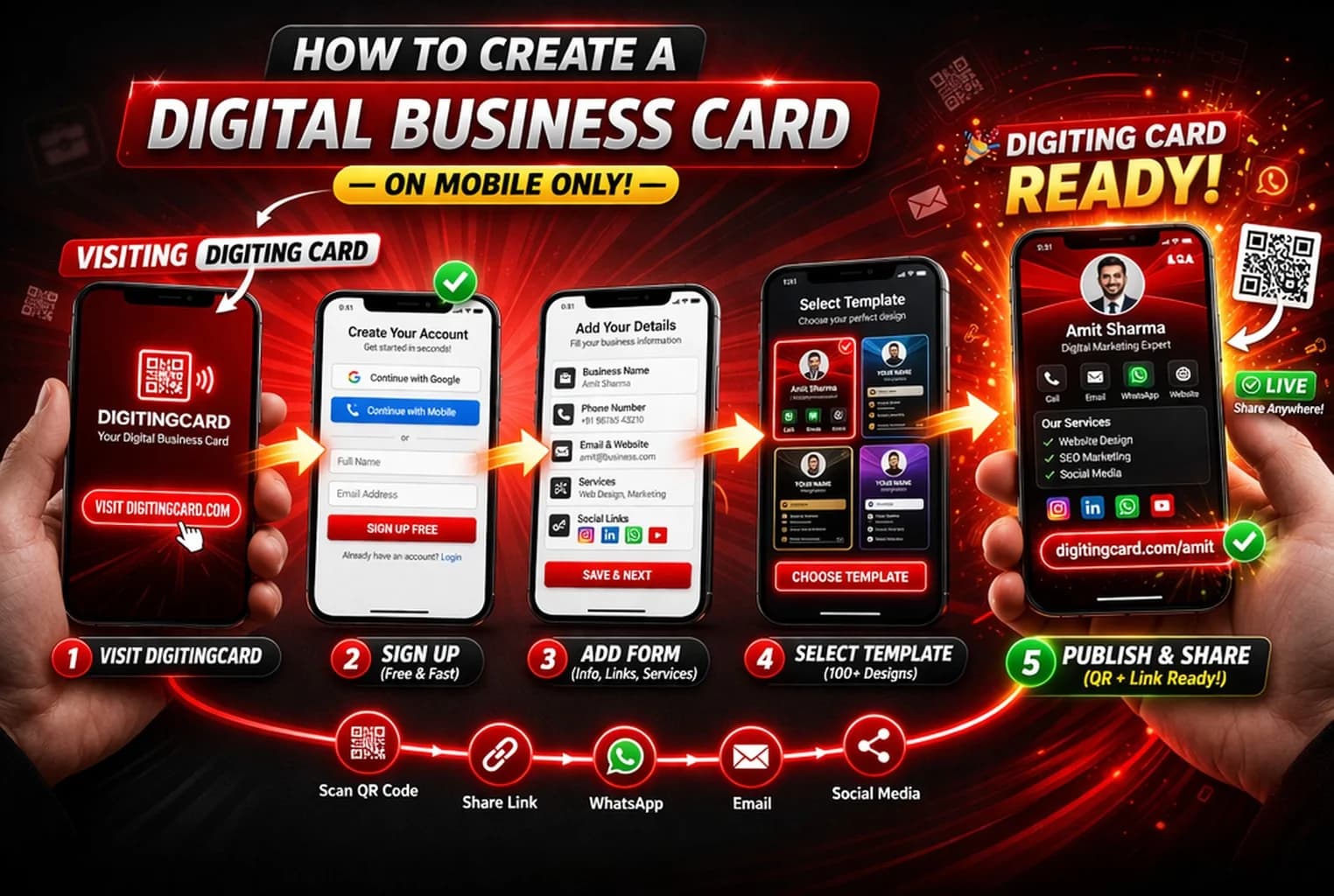
Read our practical guide on how to create a digital business card and start with a design that is easy to share on mobile.
Real example: how a small business can use both
Suppose a local interior designer meets a customer at a site visit. The designer can hand over a printed card at the meeting, then send the digital profile on WhatsApp with portfolio links, location, contact buttons, and a direct enquiry option.
The printed card handles the physical handoff. The digital profile gives the customer clickable options when they are ready to continue the conversation later.
When using both together makes sense
You do not have to make one format replace the other. Use each where it removes friction for the recipient.
Keep a printed visiting card when your meetings benefit from a physical handoff. Use the online profile when customers need current information, clickable actions, or a link you can send after the meeting.
- Use printed cards when a physical exchange helps the conversation
- Use the online profile for WhatsApp, messages, and follow-up
- Print a tested QR code when you want the paper card to open current online information
Final verdict
If your business depends on WhatsApp, calls, online follow-ups, or QR code sharing, a digital business card is a practical primary option. If you meet people offline regularly, keep printed cards too, but add a QR code that opens your digital card.
Frequently asked questions
Is a digital business card better than a printed card?
Not in every situation. A digital card is useful for clickable actions, updates, QR sharing, and online follow-up. A printed card is useful when a physical handoff matters. Many businesses can use both together.
Do people still use printed visiting cards?
Yes. Printed visiting cards are still used in meetings, local networking events, and some traditional industries. But many professionals now prefer to use a digital card alongside them.
Can I use both digital and printed visiting cards together?
Yes. A printed card can handle the physical introduction while its QR code opens an online profile that contains current contact details and other actions.
Should I add a QR code to my printed visiting card?
Yes, if a digital follow-up is useful in your workflow. Test the printed QR at its final size and make sure the destination remains a public URL you control.
Which card works better for WhatsApp follow-ups?
A direct digital-card link is usually more practical inside WhatsApp because the recipient can tap it from the chat. A printed card is more relevant to an in-person handoff.
Start with a digital business card that works on mobile
Create your card, add the details customers need, and share it on WhatsApp, QR code, or direct link. If you want to compare design options first, explore templates before you create your card.